Product Mix
In CY 2024, the Indian seafood market was predominantly oriented towards live, fresh, and chilled products, which comprised ~79% of total effective consumption, indicating a marked consumer preference for freshness and minimal processing. Frozen seafood accounted for ~12% of total effective consumption, reflecting its role in ensuring product availability and extended shelf-life. Additionally, dried, smoked, or salted items represented ~8%, while other preserved or processed preparations made up ~1%, illustrating a modest yet distinct segment for alternative product formats. These shares have remained broadly consistent since CY 2019, when live, fresh, and chilled products accounted for ~81%, frozen seafood ~10%, dried, smoked, or salted items ~8%, and other preparations ~1%.
Channel Mix
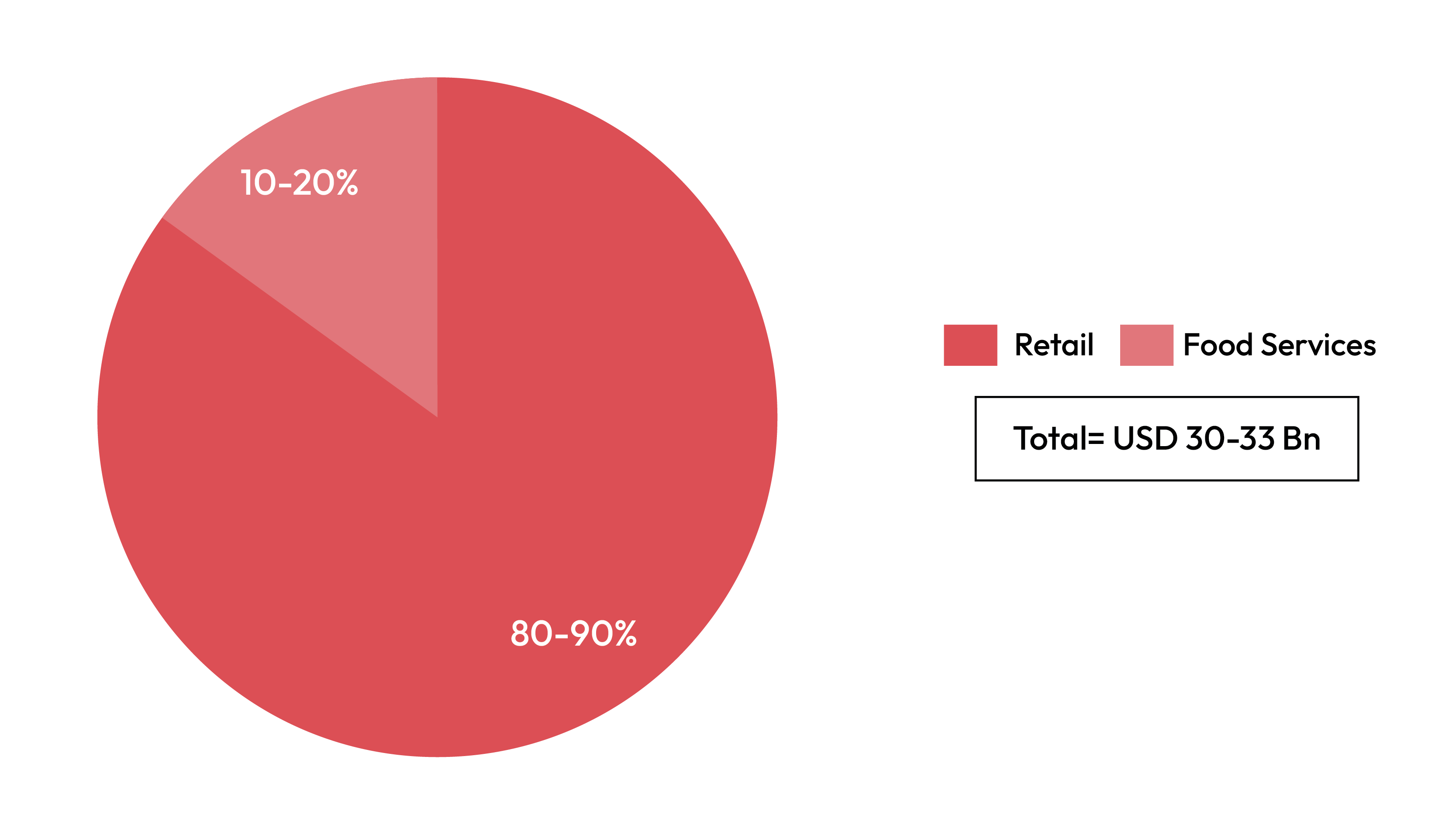
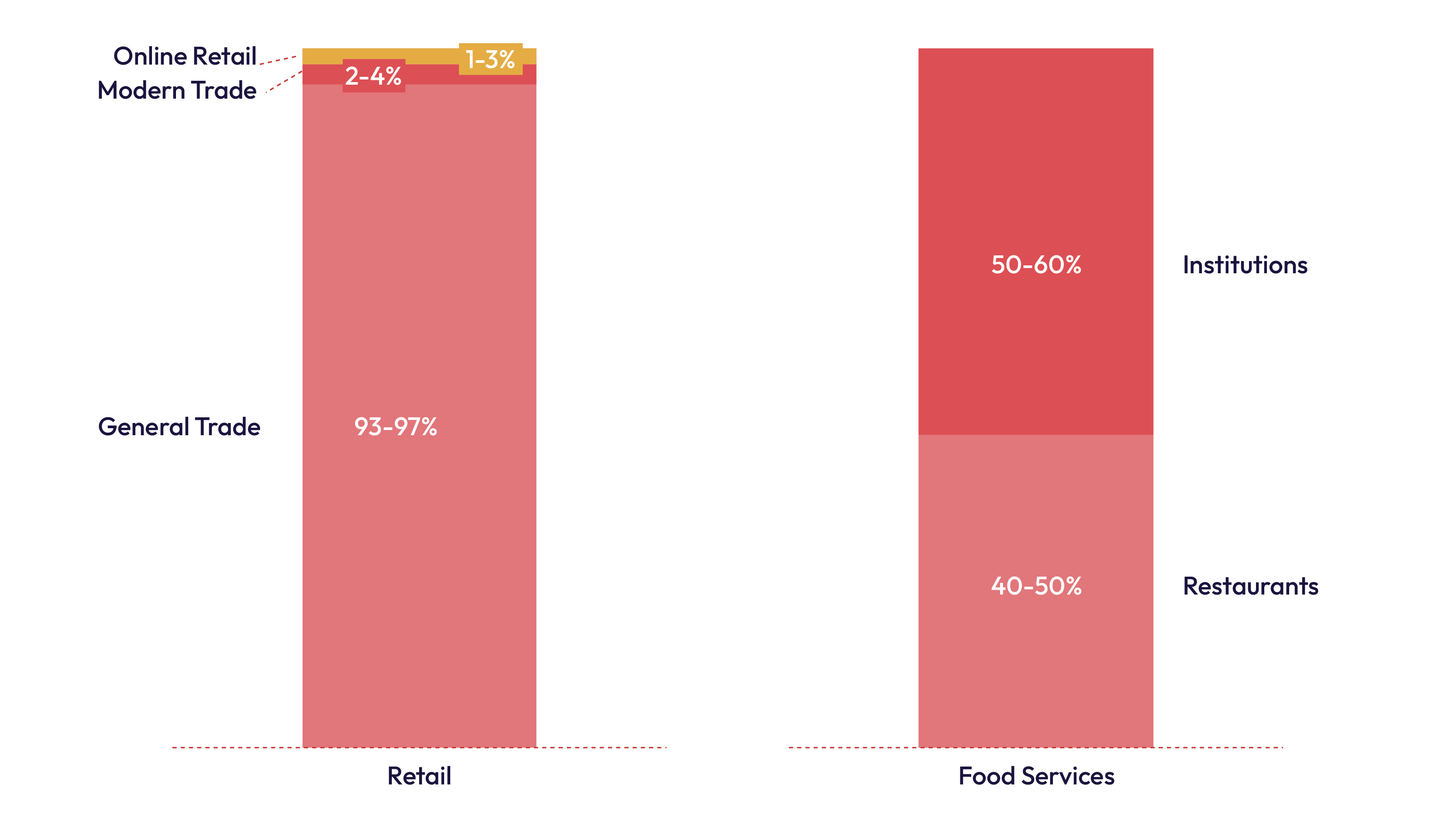
India’s seafood market remains fragmented, with traditional wet markets still playing a dominant role in the distribution of seafood. However, modern retail and e-commerce channels are gaining momentum, especially in urban areas where access to packaged and fresh seafood is increasing. Food service demand, driven by restaurants and institutional buyers, also continues to grow, particularly in larger cities. Within the retail segment, traditional independent outlets represent 93-97% of the market, while modern trade channels (including supermarkets and hypermarkets) account for 2-4%, and online retail comprises 1-3%. In the food services segment, restaurants hold 40-50% of the market share, with institutional buyers constituting the remaining 50-60%.
Changing Consumer Behaviour
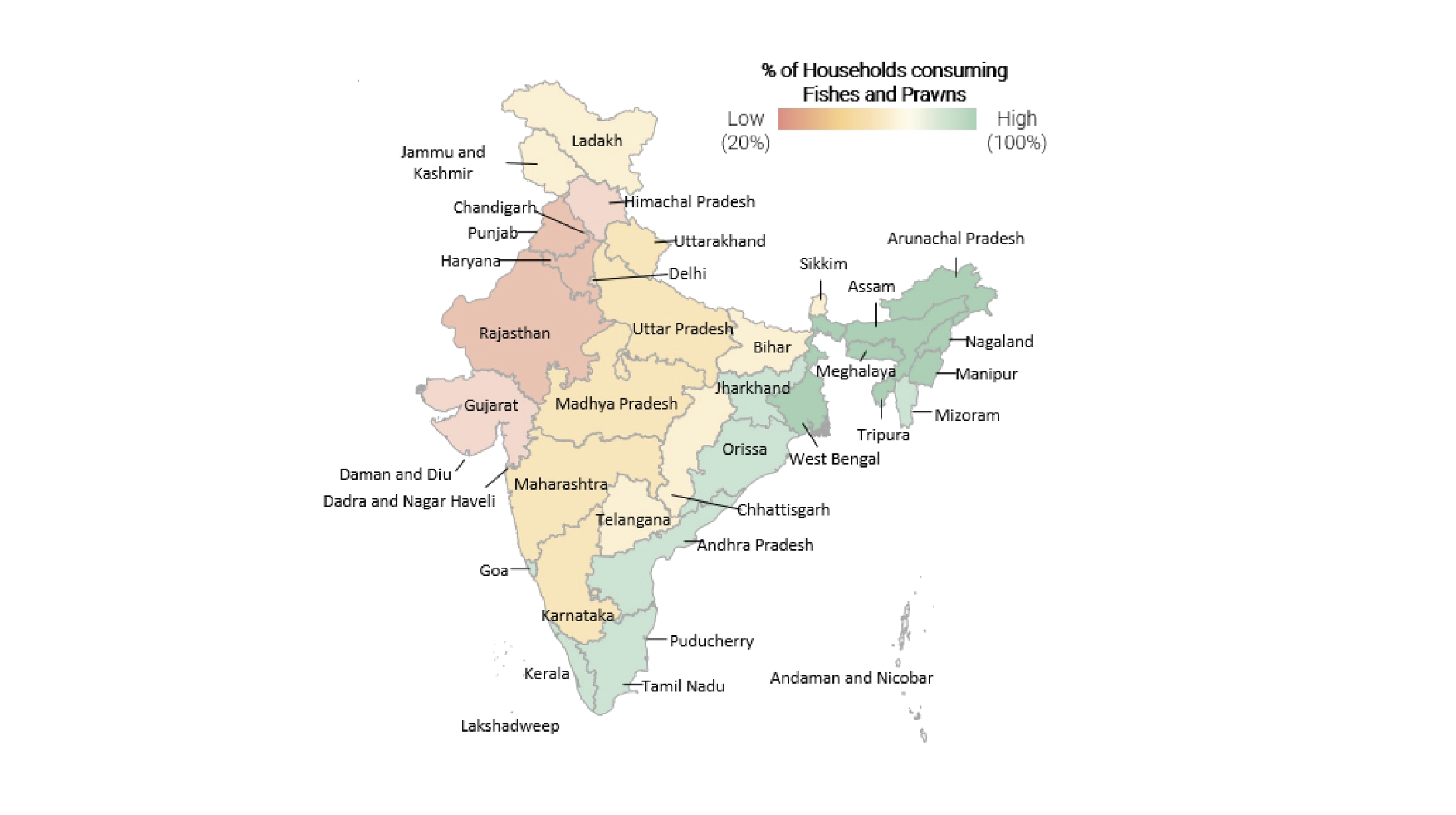
Seafood consumption in India is influenced by regional dietary patterns, affordability, and increasing urban demand for processed and value-added products. While coastal regions have a long-standing tradition of consuming fresh and locally caught seafood, inland cities are witnessing a gradual shift toward frozen, packaged, and ready-to-cook options due to improved cold chain infrastructure and changing lifestyles. Rising disposable incomes and awareness of seafood’s nutritional benefits are driving greater demand for premium species and boneless fillets, while price sensitivity remains a key factor shaping purchasing decisions.
Source(s): Redseer research and analysis